From "Broken" to Storyteller: Getting to Know Pollie"
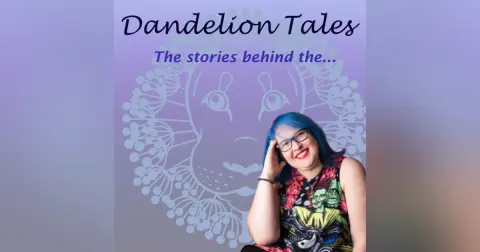
For years, Pollie believed a story about herself: that she was broken, that she didn't fit, and that nobody wanted to hear what she had to say. In this episode of Dandelion Tales, Pollie Rafferty of Change the Script™ tells you more about who she is. She grew up as an undiagnosed neurodivergent girl, at a time when autism and ADHD weren't recognised in girls. She talks about friendship, rejection and people-pleasing, and about the years when that "not good enough" story kept getting stronger....


For years, Pollie believed a story about herself: that she was broken, that she didn't fit, and that nobody wanted to hear what she had to say.
In this episode of Dandelion Tales, Pollie Rafferty of Change the Script™ tells you more about who she is. She grew up as an undiagnosed neurodivergent girl, at a time when autism and ADHD weren't recognised in girls. She talks about friendship, rejection and people-pleasing, and about the years when that "not good enough" story kept getting stronger. She also describes the night her friends dragged her to a gathering where a storyteller hushed the whole room, and how that moment changed everything.
Along the way, Pollie looks at why humans are wired for story. She covers 40,000 years of tales told around the fire, why EastEnders keeps us hooked, and the old dandelion warning that turns out to be true. She also explains why "cleaning up" an old story can take away its meaning.
In this episode:
- How the stories we tell ourselves grow stronger every time we look for evidence
- Why we have always used stories to make sense of the world
- Why everyday stories from everyday women matter more than climbing Everest
Episodes are about 20 minutes long, so they fit nicely into the school run, the housework or your commute.
🌼 Would you like to be a guest? Pollie would love to hear your story. She'll be in Birmingham at the end of October collecting stories from people she meets.
⚠️ Content note: this episode includes brief mentions of grooming, a controlling and abusive relationship, mental health struggles, and alcohol and drug use. Please look after yourself while listening. If you're affected by domestic abuse in the UK, the National Domestic Abuse Helpline is free and open 24 hours a day on 0808 2000 247.
Dandelion Tales is brought to you by Change the Script™: changing internal stories for a better future.
🔗 www.changethescript.org
Intro Music By Jacob Rafferty
Intro music By my 13 year old Jacob Rafferty
Pollie Rafferty Dip.Narrative.therapy, Cert HE Psychology is known globally as the Speakers Storyteller. She is a neurodiverse entrepreneur, author, storyteller, international speaker, and founder of Change the Script and Dandelion Tales podcast
Pollie discovered performance storytelling in 2004 while overcoming crippling anxiety that had kept her trapped in her own home. Since then she has spent years researching storytelling and narratology, trained with a former UK Storytelling Laureate, and developed the STAR Storytelling System — her own original framework for helping women find and share their stories with confidence.
She has lived experience of neurodivergence (autistic, ADHD), fibromyalgia, hypermobile EDS, anxiety and depression — and has used the power of story to change her own life from the inside out. She knows what it feels like to be silenced. And she knows the way through.
https://www.facebook.com/pollieraffertychangethescript/
https://www.linkedin.com/in/pollie-rafferty/
Hello and welcome to episode two of Dandelion Tales. This episode is sponsored by Change the Script: Challenging Internal Stories for a Better Future. This podcast is called Dandelion Tales because I believe that stories are like a dandelion sea. So, a little bit more about me today, so that you can get to know me. I'm all about getting to know people. I love people. I love people's stories. I love to find out a little bit more about them. And so I felt it was only fair if I shared a little bit about me today with you so you could get to know me a little bit. And this is the perfect opportunity. I'll share more about myself at a later date for going more in depth on my journey and the stories that I've told and the stories that have happened to me. But for now, I'm just going to introduce myself very briefly in 20 minutes. I want to try and keep the episodes roughly about 20 minutes each so that they're easy to listen to on the school run or the pickup or while you're vacuuming or doing the housework or on your way to work or wherever it is that you want to listen. Nice 20-minute chunks. So you can listen to more if you want to, or just listen to one. I have been studying psychology, I've got a diploma in narrative therapy, and I just love storytelling and everything about story and have gone deep dive into it. So I could talk for hours about it, and I thought this was a really good way to do it. So I never really understood life. I never understood anybody or what was going on. I felt like I didn't fit. I grew up thinking there was something wrong with me. I never understood what people were were trying to trying to do. I always thought I was broken. For many, many, many years I just didn't understand what was happening, to be honest. I I just got on with it because I had to. Especially not for girls around about that time. The only thing they knew about autism and things like that were the people that completely disassociated were Rayman and that sort of thing, or people sitting and and rocking. I remember seeing this thing about with a with a small child and he was sitting there rocking backwards and forwards, spinning a plate, and just doing that over and over and over again. And that was that was autism back then. That was that was what it was. There was no no understandings. I mean, dyslexia wasn't really understood back then. So I spent my school life just sitting and gazing out the window a lot of the time, just in a daydream. I could do better, was often seen on my school reports. Polly is a lovely child and and is very, very chatty, but she could work head better if she applied herself and all of these sort of things. I had a couple of close friends. I don't really know if I was bullied or not, because whatever happened just sort of went over my head. As a primary school child, I remember one friend who decided that she was going to pick on people a little bit and decided nobody was talking to anybody else. I I could never get it, I never understood, so I just carried on talking to everybody. One of the biggest things I remember from school was I had a friend. We'd been friends for years and years and years, and a new girl started at the school. She was lovely, she became in with our group. But the one day her and my friend ran off together, ran off away from me, and I remember feeling absolutely devastated, devastated, and it it had a lingering effect on me, to be honest. I think it was the rejection sensitivity disorder that comes with autism, ADHD, and all of those things. Because after that, I became hyper aware of friendships and how they worked, and whether I'd done a good job or whether I was, you know, I was being a very good friend. And I think that was the start of my people pleasing as well, because I've been a very big people pleaser throughout my life, because I'm scared that people would not like me, not want to be around me, not want to be my friend as as much as anything. So I became a very big people pleaser. I've worked on that story now, and I'm quite happy to say no to people, and I'm much less of a people pleaser. To be honest, if I start upsetting people with my podcast, with my work, with what I'm doing, that's great. That's my goal because I want to make some ripples, I want to get our women's voices heard, I want us to become more equal. And matriarchy isn't about females replacing the patriarchy, it isn't about replacing one evil with another, it's about becoming more of an equalitarian society because that's how we used to rock and roll, that's what we used to be. For hundreds of thousands of years, we were a much more equal equal society. So I've been working on my stories. Our internal stories are very, very important. We talk to ourselves in story all the time, we talk to each other in stories all the time, and stories just create everything. Everything we do, everything we say, it's a story. We have entertainment as stories, all our TV programmes. Have you ever wondered why East Enders has lasted as long as it has? It's because it's a story and it's an everyday story of everyday life. There's a bit of extra drama going on in there to keep us hooked in and it leaves us on a cliffhanger every time. The dun dun dun dun dun bit is is always the is the the cliffhanger, and it gets our even now when if you're not listening to it, if you hear that music, you get a bit of a feeling within because you know there's a there's something dramatic happening, you know, there's something that's gonna be be waiting. And as human beings, we don't like to not know, we like to know what's going on, we like things to be completed, which is one of the reasons why stories developed in the first place. So we've been telling stories for 40,000 years since we developed fire, and we had that time to sit and think and wonder, and our brains started to develop more because once we developed fire, we were able to cook our food, which made the protein easier to digest, which made our brains work better. So this is it's all very connected. So as our brain started to develop, our thought process started to develop, and we started to wonder about the world around us. Where does the sun go during the night time? Where does the moon go in the daytime? Why does it rain? What's thunder? What's lightning? Why do the crops fail? All of these questions were answered through story. It's the birthplace of a lot of our myths, religions, stories, all our legends, all come from us not knowing and us needing to find a reason behind different things. So stories have adapted, they've also been used to educate. So I don't know if you remember, I remember growing up hearing if you pick too many dandelions, you'll end up wetting the bed. That's actually based in truth. So there was a story at some point in the history. I've got to try and research it and find it. There's a story in the history at some point about the dandelion and how you can use utilise the different parts of a dandelion because you that's the flower is edible, the leaves are edible, the root can be turned into a coffee or a tincture. All of it is usable, and the sap of a dandelion is actually a diuretic. So if you do ingest too much of the dandelion stalk, you will end up wetting the bed because it's a diuretic. It's what it's designed to do. So that is a resonant of an old story that's been passed down from generation to generation to generation. And as societies got more complicated, we developed more stories to teach young people how to navigate in that society because it got more complicated. Stories were to pass on information from other cities, from other towns or communities. They were ways of passing on information. So the first hunt, for instance, when they started to figure out how to catch a larger prey that would feed the tribe for a longer time. That story then went with the tribe to the next tribe, and they learnt from that, and then they learnt from that, and they went on and and so on. So it passed through the generations of how to catch these bigger beasts through storytelling. And we're still storytelling creatures today. We tell ourselves stories, we sleep and we dream in stories, we communicate with each other. Just asking somebody how how was the the journey up or how was your day going, and somebody will say, Oh, yeah, it was great. I went and got some bread and the the traffic was fine. That's a story in itself, it's not a very good story, but it's still as a story, and our brains are actually wired to listen to stories differently. There's been fMRIs made while people have been listening to stories and telling stories, and different parts of our brains actually activate at that period of time. So it's all very interesting, it's all very scientific, and I will go into more detail of those at different episodes throughout the course of the series, or however long this goes for, because it is it is really, really interesting, and I want to be able to go a bit further in depth with each and every little bit of it. What I love about Story is that it can be as personal or as weird as you like, because people know it's a story. I tell a story about a fairy in my garden when I was little, and I leave it up to the audience to decide whether it's real or not. Because some of us do still believe in fairies and still do believe that there's magic in the world, and these stories just bring them a little bit closer. So I never really understood what was going on as I grew up. So I developed stories of my own, that I was broken, that I was rubbish, and as everything happened, I made that story bigger because we do, we see the the things that we're looking for, and we latch on to them, whether they're negative or positive. So every little thing that happened that made me feel less than just made that storyline thicker, made it bigger, made it more solid, made it more real. So I really started to lose hope as I was starting to leave school, to be honest. I was about 14 when I went off the rounds a little bit. I was always a really good girl up until that point. And apparently that's quite common from what I've heard from other neurodiverse adults, that when they hit 14, because they'd been trying so hard all that time to fit in, to be good, to fit in with that model of expectation within a school system, they started to rebel against it. And I remember I did that because I started to be encouraged by a man who was a lot older than I was. And it was fun to go out and drink and smoke and take drugs, and he would take me out and do those sort of things with me. I'd go to my Saturday job and then I'd be off down the pub at 15, down off down the pub, uh with him and other people drinking of a Saturday night. It then turned out that he was actually grooming me into a relationship that became extremely controlling and violent and abusive, which took me seven years to escape from. And that that period of time just reinforced my feelings of insecurity, of not being able to cope, with not being able to to to do it. Everybody else seemed to know what they were doing, and life was just a struggle, just the basic things working in an office, or everything that was that was around was just too much for me. So I managed to escape that relationship. I'll tell you more about it again later, because this is a brief introduction to me. I'm going to scatter bits about me, because this isn't all about me. This is about women and and hearing our voices and getting us empowered to take our rightful place. So I'm going to be scattering the stories about me, but I thought I'd introduce me a bit more this time. So that I escaped that when I was about 22, in and out of relationships, into a new relationship. I wanted to be on my own, to be honest, but I just sort of fell into this relationship. He was a lovely guy, it was nothing like any of the others, it was very different. But at some point it became neglectful. We neglected each other, really, but that gave me time to heal a little bit. And I found paganism and spirituality and religion, and it was through that that I actually found storytelling. Have I said in my introduction, the first episode, I discovered storytelling when I was overcoming anxiety that had me trapped in my own hope. It was shortly after that that I actually had a complete meltdown. I couldn't couldn't cope anymore. Life got too much, and I wasn't able to work for about six, six months. And it was it was during this time that my friends dragged me out, literally dragged me out. I couldn't go to work or anything. It was so hard to leave the house. I I just couldn't do it. And they dragged me out. And one of the things they dragged me out to was a moot, which was a pagan gathering, and they had a storyteller, and I watched her and I thought this was amazing. The room hushed while she was talking, even the bartenders stopped clinking their glasses, and everybody just listened. She transported us all off somewhere absolutely beautiful and amazing. And that was when I became hooked. I thought this is fantastic. And I saw her a few more times after that. She kept cropping up at events and telling stories at hand fastings and and other other storytelling events. And I finally plucked up the courage after months and months and months to ask her whether I could do it, whether I could be a storyteller. And she could Yeah, of course you can. She recommended some books, gave me some hints and tips, and and I went off thinking, I can do this. And I remember booking myself in for my first ever storytelling training day. And it happened to be on my birthday, which was quite a coincidence. But I thoroughly enjoyed it. And that was when I realised the difference as well, when you change a story, which so many people have nowadays, they've changed very, very well-known stories that we know a lot. So we changed Cinderella and we've changed Snow White, and they've changed changed the three little pigs, even. And I changed the first story that I told because at the end the owl dies. And I didn't like that. I love animals, I'm a big lover of animals, and I just wanted the owl to survive. The story didn't have the same impact when they didn't find the remains of the owl at the end as it did when they did find it. So I realised that changing the story isn't always the right way to go. Sanitizing the story isn't always the right way to go because it changes the subject. So that got me hooked onto the anthology of stories, of where they came from, why they were were written in the first place, what's happened since they've been changed, where the method of them was, what the message was. So that got me hooked on that. So I started to research that. Then I got into business on my own. Things rapidly changed once I got into the storytelling circle. I met my husband, we we moved down south, we had my daughter, then we got married, then we had my son, and on, and all of these things just happened. These are things I never thought would happen for various reasons. And I'd reached my level of of happiness, what I'd always ever wanted, including the washing machine. And I was happy, but work was still an issue. I wanted to do more, I wanted to be more. So I started working as a party like consultant, and when I was doing that, I realised that storytelling was very important because the more I told stories, the more I got booked, and the more products I sold. And I started to think about getting back into my my actual storytelling, but this time I wanted to share more of me, and it took a while for me to actually realise how important it was for me to share my stories because I'd felt like I wasn't good enough to share the stories. Nobody wanted to hear from me, nobody wanted to listen to little old me going on about what's happened to me. Because growing up as an ADHD, I kept on getting told, be quiet, shut up, nobody wants to hear what you've got to say. And women in general get told this anyway. All all society infers it. Society infers that we need to be quiet or subservient or not have an opinion, and social stories need to change, and that's my ultimate goal. And it took a lot for me to change those stories about my story not being interesting and all. But to be honest, climbing Mount Everest is great for somebody who wants to do it, but for somebody who wants to just get up in the morning and clean their teeth, it's not uh it's it's too far away. So I'm sharing everyday stories for everyday people with everyday problems. And together we can uh uh change people's opinions, we can change society, and we can change the way people think. So listen in for the next episode because I will probably go on a little bit more about myself because there is so much to unpack, so much to uncover, and I need you to come and be a guest. Please just come and be a guest. I'm going to be in Birmingham in October, the end of October, asking random people for their stories, which is going to be very, very exciting. Birmingham's my old stomping ground, it's where I grow up. So I'm looking forward to that. So thank you very much for listening. I hope you enjoyed it. Please comment, let me know, like it, share it, and subscribe. Thanks very much. Bye.